


Slightly Foxed Editions

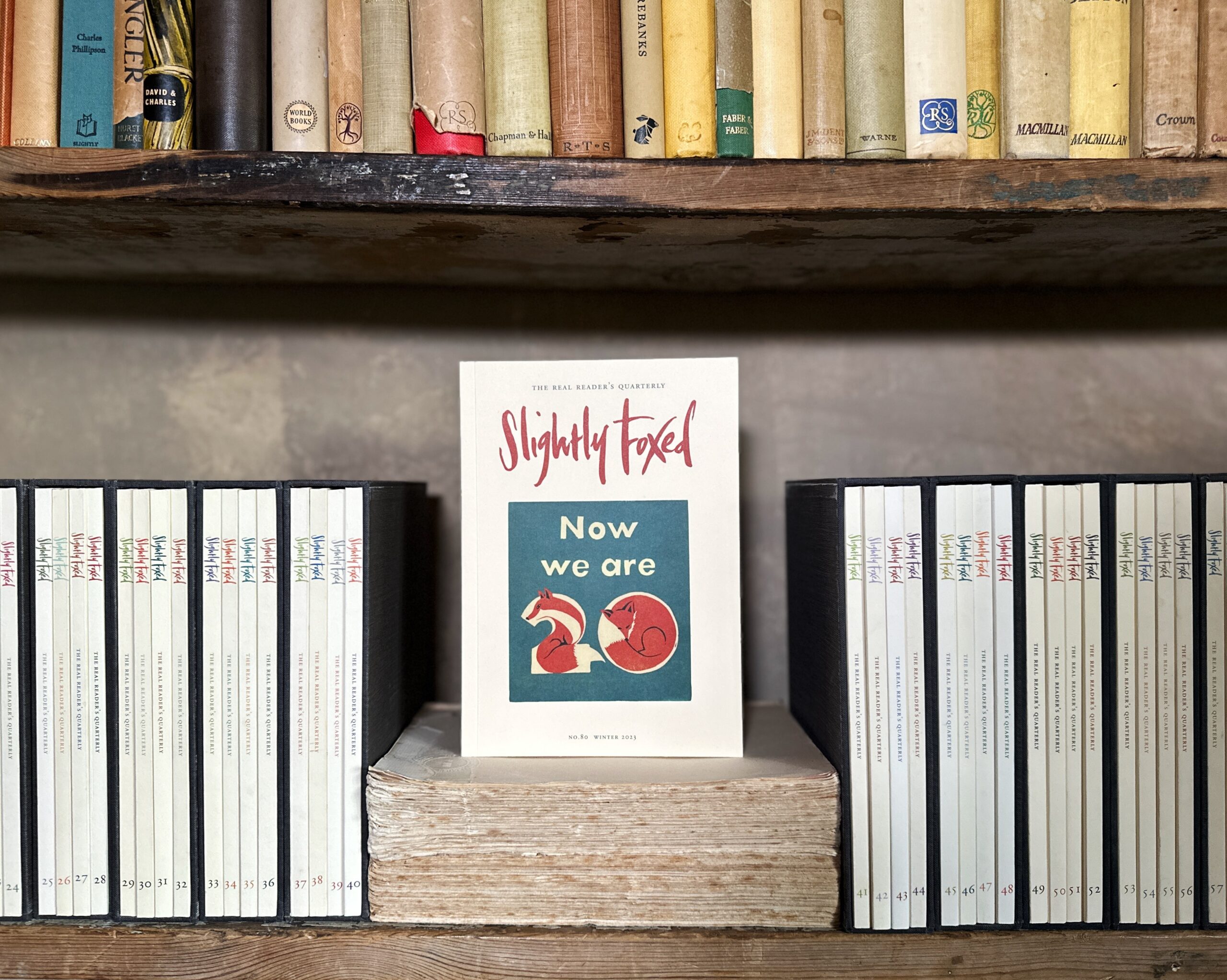
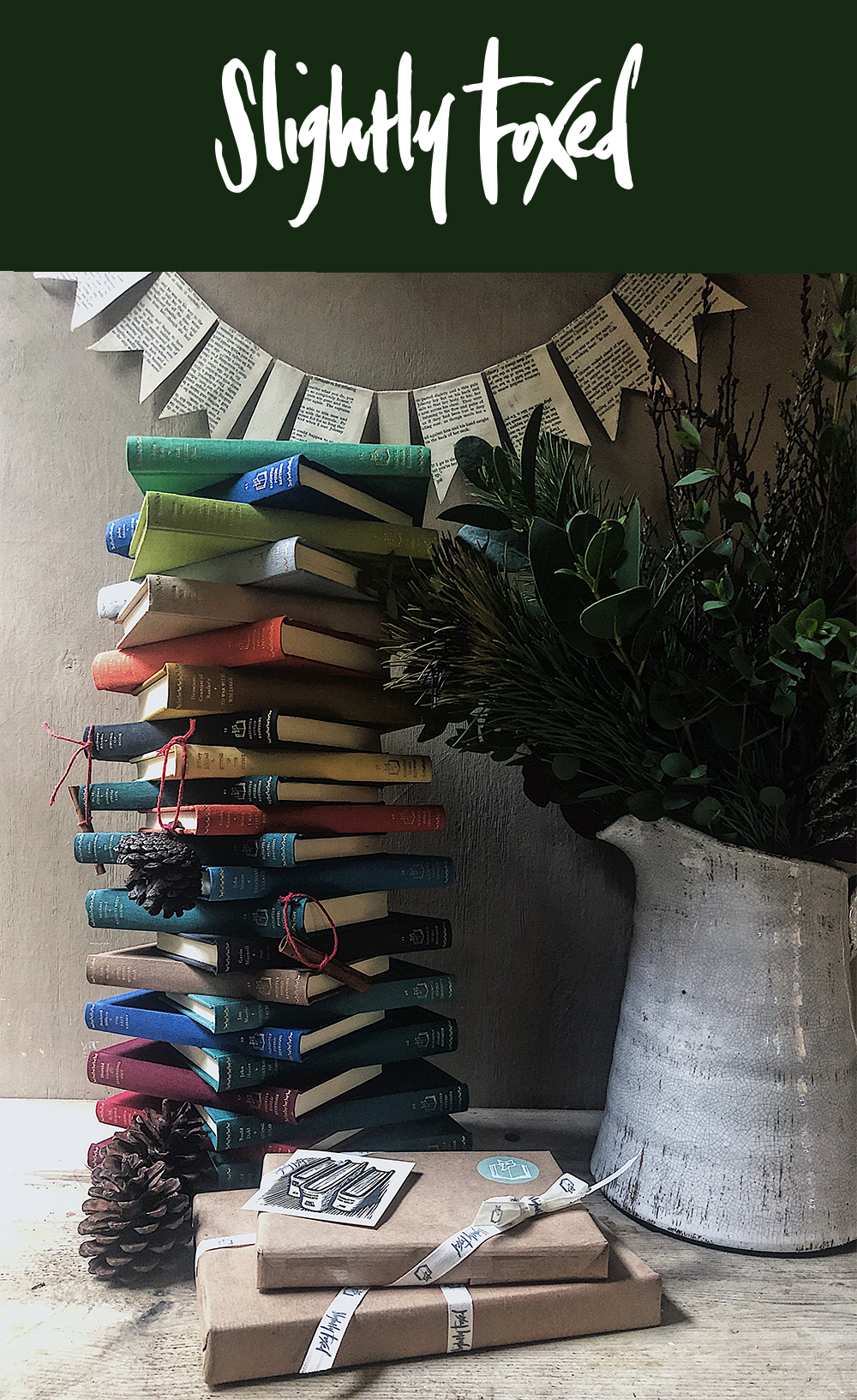
Slightly Foxed Editions are clothbound pocket hardbacks, printed — by our wonderful craftsmen printers Smith Settle — on the same delicious cream paper as Slightly Foxed, with coloured endpapers, headband, tailband and silk ribbon marker. Each title is published in a limited, numbered edition of 2,000 copies.

Slightly Foxed Editions 1-12

If youd like to be notified of new releases, please sign up to receive our monthly newsletter

Please scroll down to browse and buy available Slightly Foxed Editions.

To view a full list of all those published please click here.

no 18 Elspeth Huxley, The Flame Trees of Thika

UK £16 • EU £17 • Rest of the world £18 • Cloth binding • Silk headband, tailband and ribbon marker • 170 x 110mm • 360pp

flame-treesWhen Elspeth Huxley’s family arrived in the dusty lanes of Nairobi in 1913, British East Africa was still a kind of Garden of Eden, filled with an abundance of wild creatures and virtually untouched by the destructive hand of man. It was also a land of dreams, a place for the recouping of lost fortunes by those who hadn’t managed things very well elsewhere.

Six year-old Elspeth and her parents – whom, in her memoir, she calls Robin and Tilly – were bound for Thika, 500 acres of bush which had been sold to Robin on arrival as ‘the best coffee land in the country’ by Roger Stilbeck, a splendid rogue wearing an Old Etonian tie and a perfectly cut suit.

Like many of those from the ‘Old Country’, Elspeth’s parents were innocents abroad. Gentle and charming Robin, now on his uppers, had ‘unfortunately’ inherited some money and had made a habit of involving himself in schemes that invariably crashed. Tilly, born into an impecunious branch of the Grosvenor family, was forthright and practical. Both were also incurable optimists, dreaming of the prosperous orchards and plantations and the grand stone house they would soon build – though in fact they were to remain for fifteen years in the thatched hut with a beaten earth floor that they had put up immediately they arrived, bizarrely surrounded by odd pieces of fine furniture and other genteel remnants of their comfortable past.

Elspeth Huxley evokes both the harshness and the beauty of the life that, against all the odds, they managed to create, of the mutually dependent society of those early white settlers, and of the effect of Africa and its native people on the imagination of a solitary and self-sufficient small child. The Flame Trees of Thika paints an unforgettably vivid and poignant picture of the forging of a world, and its dissolution in the tragedy of the First World War.

This title is published on 1st June 2012. Please do pre-order now. Copies will be dispatched immediately on publication.

no 17 Suzanne St Albans, Mango and Mimosa

UK £15 • EU £17 • Rest of the world £18 • Cloth binding • Silk headband, tailband and ribbon marker • 170×110mm • 256pp

This magical memoir, first published in the 1970s, tells the story of a most unusual pre-war childhood. Suzanne St Albans’ family moved restlessly between the home her lovable but ill-assorted parents had created out of the ruins of an old Provençal farmhouse near Vence, and Assam Java, the plantation her father had inherited in Malaya.

Mango

Theirs was a self-sufficient world, for her father, a frail and intellectual recluse and quite the opposite of her impulsive, gregarious mother, found social life a dreadful strain and hid in the basement at the hint of visitors, while Marie, their severe but adored Swiss nanny, had a deep mistrust of ‘other children’. At Mas Mistral, with its dreamy garden and vine terraces, they were surrounded by a convivial but eccentric household of servants and helpers. In the steamy jungle heat of Assam Java, where electric storms thundered across the sky, animals almost took the place of people, for Marie was a keen naturalist. In the courtyard lived a menagerie of friendly creatures, some rescued, some adopted, including a stork who liked playing badminton, a small monkey, and Titi the pet hen, who, assisted by a small ladder, laid her eggs in the nursery wardrobe among the children’s clothes.

Back in France, the family spent idyllic summers on the long white beaches of the Atlantic coast in the company of family friends, and it was here that Suzanne experienced the confusions, embarrassments and misunderstandings of first love. The outbreak of war in the late summer of 1939 scattered their small group to the winds. It was the end of Suzanne’s childhood, and the end of this funny, observant and entirely original book. Her education may have been patchy to say the least, but as a writer she was clearly a natural.

You can watch Mango and Mimosa being made by our Yorkshire printers in this delightful little film by Glen Milner for the Telegraph:

Birth of a Book

no 16 Dodie Smith, Look Back with Love

UK £15 • EU £16 • Rest of the world £17 • Cloth binding • Silk headband, tailband and ribbon marker • 170×110mm • 272pp

Writing in Slightly Foxed, Dodie Smith’s biographer Valerie Grove describes Look Back with Love as ‘one of the happiest and funniest accounts of an Edwardian upbringing’.

Dodie

And indeed it is. Best known for her first novel I Capture the Castle, for the evergreen The Hundred and One Dalmatians, and for Dear Octopus, her 1938 play set at a family reunion, Dodie did not publish this account of her early life until 1974 when she was 78.

Brought up among her mother’s family since her father had died when she was a baby, Dodie spent her childhood surrounded by doting adults. It was the jolliest environment imaginable – the Furbers adored seaside trips, motor-car outings, fairgrounds, circuses, jokes, charades and musical soirées. Above all they loved the theatre, and it was through her bachelor uncles’ involvement in amateur dramatics that she conceived her passion for the stage.

Her memoir gives a wonderful picture of this large extended family and of life at that time in the ‘basking Sunday afternoon charm’ of Manchester’s Victorian suburbs. And of the funny, complicated, creative little girl who would later say of herself ‘I think I’m an oddity really, but I do my very, very best to write well’ – which in Look Back with Love she certainly did.

no 14 Frances Wood, Hand-grenade Practice in Peking

UK £15 • EU £17 • Rest of the world £18 • Cloth binding • Silk headband, tailband and ribbon marker • 170×110mm • 240pp

China in 1975 was a strange, undiscovered country, still half-mad from Mao Zedong’s Cultural Revolution, when young Frances Wood boarded a plane in London to study for a year in Peking.

Hand-grenade Practice in PekingVirtually closed to outsiders for the preceding decade, China was just beginning to make tentative moves towards the outside world when Frances and her fellow students were driven in an ancient coach through the dark silent countryside to their new quarters at the Foreign Languages Institute. Here they were settled into small rooms with hard iron beds and a single dim light bulb. Outside were showers powered by an enormous boiler emitting boiling steam from cracks in the pipework. Next day, at the medical centre, they learned that medical treatment was free but ‘we would have to pay for our own abortions’.
Throughout the following year in an extraordinary Alice-in-Wonderland world where ‘education’ consisted of shovelling rubble, hand-grenade practice, and cripplingly tedious ideological lectures, Frances never lost her sense of humour. Or indeed her fascination for the ancient civilization that lurked behind the Cultural Revolution’s grim façade. Based on the letters she wrote home in 1975‒6, Hand-grenade Practice in Peking is both affecting and hilarious, a unique insight into a mysterious and painful moment in China’s history. It was an interlude which would eventually lead Frances to her present position as head of the Chinese collection at the British Library.

no 13 P. Y. Betts, People Who Say Goodbye

UK £15 • EU £17 • Rest of the world £18 • Cloth binding • Silk headband, tailband and ribbon marker • 170×110mm • 312pp

‘The most amusing book of childhood memories I can remember reading’ was Graham Greene’s judgement of P. Y. Betts’s People Who Say Goodbye.

BettsSuccessful early on as a short-story writer and a contributor to Greene’s prestigious but short-lived magazine Night and Day, P. Y. Betts shone briefly but brightly in the literary firmament during the 1930s and then was heard of no more. Rediscovered fifty years later living contentedly alone on a remote Welsh smallholding, she was encouraged by a publisher to put pen to paper again and produced this irresistibly funny yet poignant memoir.

She was born in 1909 into an unconventional middle-class family living in Wandsworth when it was still a countrified suburb. Nearby was the great prison, where from time to time a crowd gathered at the gates when a murderer was to be hanged. Down the road was a military hospital, from which, during the Great War, the ‘sad, lamenting never-coming-back notes of the Last Post’ would often be distantly heard.

These were powerful early impressions for young Phyllis, but People Who Say Goodbye is far from sad. In fact her clear-eyed account of life in the Betts family circle is sharply comic – the clashes between the carefree Betts household and her mother’s snobbish and conventional family living across the Common; the holidays at Brattle Place near Dover, with its terrifying and toothless landlady Mrs Milton; the happy, undemanding days in Mrs Stroud’s school where dictation was given from leaders in the Daily Mail. P. Y. Betts is a truly original voice and People Who Say Goodbye is a delight – a powerful evocation of a time and place and an unsentimental account of being a child that has the unmistakable ring of truth.

no 12 Edward Ardizzone, The Young Ardizzone

UK £15 • EU £17 • Rest of the world £18 • Cloth binding • Silk headband, tailband and ribbon marker • 170×110mm • 208pp

There can be few author-illustrators whose books are remembered – and still read – with such affection as those of Edward Ardizzone. And affection is the keynote of this charming memoir, which brings alive in words and pictures the comfortable Edwardian world in which Ardizzone grew up.

The Young ArdizzoneThe author of the ever-popular Little Tim and Lucy books (and illustrator of many more) begins his story in 1905, when he was 5 and his mother brought him and his two sisters home to England from Haiphong, where his father was a telegraph engineer. Having settled them in the remote Suffolk village of East Bergholt she returned to the Far East for three years, leaving them in the care of their maternal grandmother, a much-loved but somewhat alarming figure whose sudden inexplicable outbursts of temper could turn her face almost literally black with rage.

Thereafter, like many colonial children, the young Ardizzones led a somewhat peripatetic existence, punctuated by visits from their mother – once with a surprise new brother and sister in tow. But they grew up with a full complement of cheerful young bachelor uncles, great aunts and eccentric family friends – all beautifully and often poignantly captured in Ardizzone’s deceptively simple prose and delicately humorous drawings. This book is a must for fans of Ardizzone, young and old, and a perfect introduction for those who haven’t yet discovered him.

Monday 14th May 2012

NB We have run out of stock of this title in our London office. More copies will be brought up from our Devon storehouse in late June. Please do order now and we’ll dispatch your book as soon as possible. If you have an urgent need for a copy of this book, please try the following bookshops as they regularly order our editions and may have stock.

Slightly Foxed on Gloucester Road (020 7370 3503)
John Sandoe (020 7589 9473)
G. Heywood Hill (020 7629 0647)
Hatchards (020 7439 9921)


no 11 Graham Greene, A Sort of Life

UK £15 • EU £17 • Rest of the world £18 • Cloth binding • Silk headband, tailband and ribbon marker • 170×110mm • 224pp

Graham Greene once said that writing this memoir of his early years ‘was in the nature of a psychoanalysis. I made a long journey through time and I was one of my characters.’ Certainly the younger self that emerges is as complex and intriguing as any of those he created in his novels.

Greene grew up in Berkhamsted among a large colony of Greenes, and attended Berkhamsted School, where his father was headmaster. As it turned out, the conflicting loyalties this produced, combined with the secrecy and subterfuge encouraged by the school’s puritanical regime, were the perfect grounding for the spy – and the novelist – he was to become. But the price was high. By the time he was out of his teens he had had what would now be called a nervous breakdown, undergone psychoanalysis – unusual for the 1920s – and become addicted to playing Russian roulette with his brother’s revolver.

A Sort of Life takes him through Oxford, the early years of marriage and his conversion to Catholicism, to the point where he recklessly gives up his first Fleet Street job as a sub-editor on The Times in order to write full-time. But what marked Greene out above all else was his utter determination to pursue his craft. There can be no more fascinating or illuminating account of what it takes to become a writer.

no 9 Ted Walker, The High Path

UK £15 • EU £17 • Rest of the world £18 • Cloth binding • Silk headband, tailband and ribbon marker • 170×110mm • 224pp

In his prizewinning memoir The High Path, Ted Walker recreates with unusual vividness his secure, happy childhood in the England of the Thirties and Forties, and the influences that made a working-class boy into a poet.

Seagull

Most telling, perhaps, was his relationship with his father, a carpenter who had come to the Sussex coast from Birmingham in search of work before Ted’s birth. The affection between the two shines out from the tender portrait of him, cruising the last mile home from work on his Ariel motorbike, playing backyard cricket with typical concentration, or struggling to master French with Ted, urged on by their loveably eccentric teacher Mr Jupp.

A sense of history came from magical visits to his father’s family in the Worcestershire countryside, and sensuous pleasure from the grocer’s shop managed by ‘Grandad Harry’ – an Aladdin’s Cave where ‘a wondrous blend of smells: nutmeg and cinnamon, dog biscuits and bran, wax polish, ripe cheese and Brasso all harmonized to give a sense of good things kept in spotless order’. It is a picture of a proud and thrifty working-class world now utterly lost.

With grammar school and a place at university a gap began to open between Ted and his parents. These new experiences brought intellectual confusion, romantic longing, sexual frustration, but the warmth of his happy childhood was still his bedrock. The High Path is a beautiful book, written with all the honesty and sensitivity of the poet Ted Walker became.


no 8 James Lees-Milne, Another Self

UK £15 • EU £17 • Rest of the world £18 • Cloth binding • Silk headband, tailband and ribbon marker • 170×110mm • 256pp

James Lees-Milne, writer and architectural historian, is probably best remembered for his mischievously perceptive diaries, which chronicled the doings of upper-class English society from the Second World War onwards in twelve addictive volumes. Another Self, his fanciful, funny, yet poignant account of his early years, has the same gripping quality.

A deeply religious child, Jim spent much of his boyhood wandering dreamily in the grounds of his parents’ medieval manor house in Wickhamford, Worcestershire. It gave him a nostalgia for the past and a love of historic buildings which would lead to his later distinguished career with the National Trust.

His father, however, had no time whatsoever for such arty attitudes. He determined that, after leaving Eton in 1926, Jim should ‘stand on his own feet’ and accordingly enrolled him in Miss Blakeney’s Stenography School for Young Ladies in Chelsea where, as the only male student, he spent a lonely year learning shorthand and typing. Thanks to his mother he escaped to Oxford (a disappointment) and thence to London, where he had another searing experience as assistant to Sir Roderick Jones, the boorish and dyspeptic chairman of Reuters. Droll, shy and sexually ambivalent, Lees-Milne wrote that he ‘always felt an outsider in every circle’. It was this, combined with his eye for detail and highly developed sense of the ridiculous, that made him such a wonderful comic writer. John Betjeman compared the impact of Another Self to that of Evelyn Waugh’s Decline and Fall.

no 7 Michael Wharton, The Missing Will

UK £15 • EU £17 • Rest of the world £18 • Cloth binding • Silk headband, tailband and ribbon marker • 170×110mm • 288pp

For nearly fifty years Michael Wharton, under the pseudonym ‘Peter Simple’, produced one of the funniest satirical columns in Fleet Street. This memoir of what he called his ‘deformative years’ is equally irresistible, absurdly amusing, yet touched with a haunting melancholy.

sfe_7The creator of such deathless characters as Julian Birdbath the unsuccessful writer, Dr Heinz Kiosk the well-known psychoanalyst, and Dr Spacely-Trellis the go-ahead Bishop of Bevindon – who all appeared regularly in the column – was born Michael Nathan in 1913 in the West Riding of Yorkshire. His father, from a prosperous German-Jewish émigré family, was in the wool trade, a compulsive gambler who spoke four languages, all with a Yorkshire accent. His mother, a barely literate Yorkshire girl whose maiden name was Wharton, was convinced she was related to the Whartons of Wharton Hall in Westmorland and spoke mysteriously of a ‘missing will’ which, when found, would restore the family fortunes.

This was not the only ‘missing will’ in the Wharton story, for Michael, though clearly intelligent, was, as he typically put it, ‘born to function on one cylinder only’. Given to paralysing bouts of gloom, he viewed his eccentric family with their outsider mentality, their irritable ‘fratching’, their strange Anglo-German mispronunciations and titanic farting competitions as if through the wrong end of a telescope. How he finally made his escape into the liberating air of Fleet Street, via a lamentable Oxford career, war service in India, and years adrift in London’s post-war bohemia, is the subject of this entirely original and darkly funny book.